
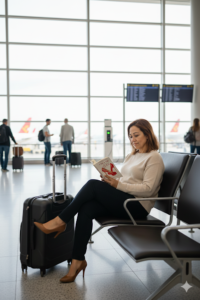
There is a weight few truly understand, a weight not of metal or stone, but of memory, fear, and longing. In Para Mis Tacones Altos: Manual de Supervivencia, Ileana Rojas does not merely recount her migration story — she takes readers deep into the emotional aftermath of exile, a territory where grief and resilience live side by side.
To flee is more than just to leave. It is to dislodge one’s soul from the soil that shaped it.
The passage Rojas shares, filled with vivid personal pain, captures this reality. When she describes the impossible task of fitting a life into a suitcase, she reveals the essence of the refugee condition: trying to preserve identity while abandoning almost everything else. Her narrative is not about logistics — it’s about legacy, about the intangible fragments of home that we are forced to leave behind but never stop carrying within us.
As Rojas recalls her families forced departure from Venezuela, the reader witnesses the painful split between what must be done for survival and what must be sacrificed in the process. There’s nothing romantic about the idea of migration when it stems from political persecution, social collapse, or fear. And yet, within her heartbreak, there’s also incredible dignity. She embraces fear not as an end, but as a propulsion, a signal to move, to protect, to rebuild.
Ileana’s reflection on the “buzzing” that warned her of danger speaks volumes. For many women, intuition is dismissed. But for Rojas, it becomes a vital alert system — the ancestral voice that knows when a home is no longer safe. She honors that voice and, in doing so, gives voice to countless other women forced to flee.
What makes her story even more poignant is the perspective of a mother. When she chooses what to pack, it isn’t jewelry or shoes — it’s baby toys and family photos. Her priorities reflect the essence of maternal courage: the decision to protect, even when it means breaking your own heart.
And still, there is humor in her honesty. She laughs — softly, perhaps bitterly — at the idea that 23 kilos should contain an entire life. It’s a moment that every immigrant, exile, or displaced person understands. How do you compress home into 50 pounds? You can’t. But you try.
The power of Para Mis Tacones Altos lies in this blend: the deeply personal and the universally recognizable. Rojas’s journey from Caracas to Europe and eventually the United States is not just a story of escape — it’s a story of rebirth. It’s the aching truth of leaving, yes, but also the invincible hope of arriving.
This article, born from one of the book’s most moving excerpts, reminds us that migration is not just a physical act. It is spiritual surgery — the severing of place and the stitching together of purpose.
Ileana Rojas walks through fire in heels not to show off — but to show others that we can endure with grace. That sometimes, courage looks like walking away from everything you love, with nothing but faith and 23 kilos to hold you.